
Poison In The Honey
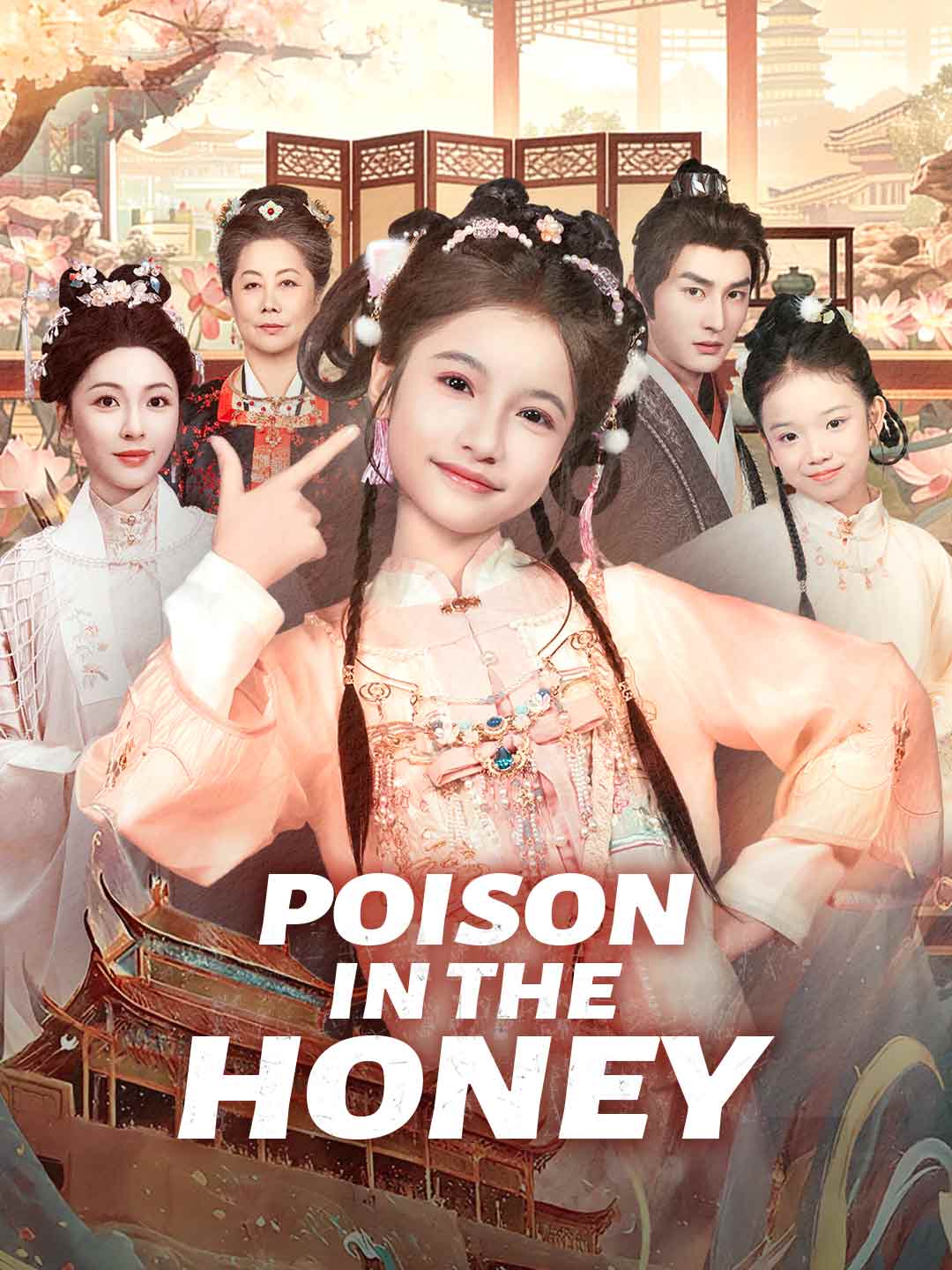
Poison in the Honey
Hey, everyone! How are you doing? Today I'm taking on the drama Poison in the Honey, streaming on ReelShort, which delivers a gripping cocktail of vengeance, intrigue, and psychological tension that keeps viewers absolutely glued to their screens. This show has emerged as a remarkable standout in the world of compact drama, marrying elaborate plot work with emotionally powerful character performances that go well beyond what the genre typically offers. What gives Poison in the Honey its distinctive edge is the way it delves into treachery, personal reinvention, and the life-altering force of getting a do-over, all packaged in a story that skillfully juggles quiet character-driven moments with grand, high-stakes drama. The concept -- a young woman given a fresh shot at life following devastating family betrayal -- grabs you immediately, but the real brilliance is in the execution. The series avoids recycling worn-out revenge formulas; instead, it probes the psychological messiness of seeking payback, the toll of living a lie, and what it genuinely takes to piece yourself back together from total ruin. For viewers who want sharp, character-focused narratives with authentic emotional heft, this show is a must-watch that satisfies on every front.
Poison in the Honey sets itself apart with outstanding production craft, making the most of ReelShort's compact episode structure in ways that feel purposeful rather than constrained. The series features polished camera work that oscillates between tight character portraits and expansive visual storytelling, cultivating an on-screen language that manages to feel both refined and intensely personal at once. Every episode is assembled with care to deliver forward plot motion while nurturing intricate character dynamics, showing exceptional command of tempo and rhythm. The production crew has clearly poured significant resources into building sumptuous environments that conjure the grandeur of the Graham estate -- which functions practically as its own character -- while keeping visual coherence intact across the extended episode order. The technical skill reaches beyond surface aesthetics; the editing cadence dovetails perfectly with the emotional heartbeat of each scene, with introspective pauses carrying just as much weight as dramatic showdowns. The audio landscape merits special praise, as understated musical motifs and ambient sound design build an atmospheric richness that deepens viewer immersion. Particularly noteworthy is how the series sustains its visual standard across a lengthy run, sidestepping the familiar trap of declining production polish as extended stories wear on. The craftsmanship on display here is proof that short-form drama does not have to trade cinematic ambition for brevity.
Thematically, the show weaves together explorations of selfhood, broken trust, and the possibility of starting over, threading them throughout every layer of the narrative. At its foundation, Poison in the Honey puts family allegiance under a microscope, exposing the catastrophic fallout when a father's affection turns out to be transactional and weaponized. The story tracks how suffering reshapes who we are, charting Nora's psychological metamorphosis from sheltered heiress to cold-eyed tactician. Just as significant is the show's focus on female power and self-determination -- the heroine flat-out refuses the role of victim, instead converting her anguish into deliberate action and methodical resistance. Where Poison in the Honey truly distinguishes itself is in its layered take on the revenge genre; rather than celebrating retribution outright, the narrative honestly reckons with its psychological burden and ethical gray areas. The show manages to present a lead character whose motivations feel completely warranted while still asking whether settling scores ever truly mends the broken parts of us. Through Nora's odyssey, the series grapples with themes of self-reinvention, the prospect of building something new from wreckage, and whether anyone can truly outrun the long reach of family wounds. This thematic density guarantees that viewers are not just swept up in plot twists but genuinely stirred by the bigger questions the story raises about fairness, mercy, and personal evolution.
A Heiress Reborn: From Betrayal to Calculated Vengeance
The opening chapters introduce us to Nora Graham living inside a bubble of wealth and seeming warmth -- a cherished daughter wrapped in fatherly devotion and material luxury. Yet this picture-perfect world shatters when she stumbles onto a gutting truth: her father's loving attention was a carefully staged performance designed to prop up her half-sister, casting Nora as nothing more than a chess piece in a bigger scheme. This discovery lands not as a slow awakening but as a total, annihilating betrayal, setting off a domino effect that obliterates everything she believed to be true. The family's implosion is swift and merciless, leaving Nora stripped of her wealth, her standing, and her sense of self. The opening stretch does exceptional work establishing the emotional stakes -- we watch Nora's entire universe disintegrate in real time, absorbing her disbelief, her devastation, and her eventual despair alongside her. The visual language during these passages is especially striking, deploying contrasts of brightness and darkness as metaphors for her psychological unraveling. What makes these early episodes so riveting is not just the dramatic reversal itself but the emotional authenticity that saturates every frame.
As the story continues, Nora's demise and subsequent resurrection introduce the show's foundational conceit: a second opportunity to rewrite her destiny. Forged by suffering and armed with insider knowledge of the conspiracy, she re-enters the Graham household not as the trusting girl she once was but as a calculating operative wearing the disguise of a devoted daughter. The series builds tremendous tension through the chasm between Nora's outward performance and her inner reality -- viewers see her true agenda while watching her navigate a house full of potential threats. Subplots involving her half-sister's machinations, her father's corporate dealings, and buried loyalties intertwine with the primary storyline, constructing an elaborate tapestry of suspense. The question that keeps audiences hooked is ever-present: will Nora pull off her master plan, or will her adversaries sniff out what she is really up to? The show wields dramatic irony like a precision instrument, letting viewers savor Nora's cunning while preserving authentic uncertainty about where things will land. Each new episode strips away another layer of the conspiracy, pushing both Nora and the audience to reevaluate what they thought they understood about the past and what is unfolding in the present.
Nora Graham: The Architect of Her Own Resurrection
The heroine of Poison in the Honey stands as one of the most riveting figures in current drama -- a woman whose transformation from powerlessness to total self-command feels psychologically believable and emotionally hard-won. Nora's initial portrayal as a privileged but ultimately unsuspecting heiress amplifies the impact of her later evolution; because we understand the girl she was before the betrayal, her emergence as a strategic mastermind registers as organic character growth rather than a convenient narrative shortcut. The lead actress captures the delicate emotional frequencies the role demands -- the iron discipline required to maintain her cover while periodically exposing the wounded soul hiding beneath the composed exterior. From her first post-resurrection appearance, there is a visible edge in her eyes that did not exist before, a physical marker of internal transformation. The performance is at its finest in scenes demanding that Nora project familial devotion while raging internally with entirely justified fury. Particularly striking is how she communicates Nora's inner tug-of-war -- the corner of her heart that still aches for authentic fatherly love locked in battle with the rational mind that understands such love was never real to begin with.
What pushes Nora past the boundaries of a conventional revenge heroine is the show's refusal to clean up her methods or frame her as purely noble. She is fully capable of ruthlessness, deception, and premeditated betrayal -- not out of inherent cruelty, but because the hostile terrain she occupies demands such weapons. Her relationships lay this complexity bare; around trusted allies, she occasionally permits genuine tenderness to surface, while against enemies, she is brutally effective. The character crystallizes the show's core thesis: that trauma reshapes us in ways we cannot always control, and that the boundary separating justice from revenge is far murkier than anyone wants to believe. Nora's storyline confronts the question of whether one can wage righteous war without morphing into the very enemy one fights -- and the series wisely avoids offering a tidy resolution. Her internal narration, in the moments it appears, reveals a mind in perpetual motion -- calculating, weighing risks, strategizing three moves ahead. Yet genuine humanity keeps breaking through -- her openness with people she tentatively trusts, her tangled emotions toward family members she has resolved to bring down. This psychological dimensionality ensures audiences stay hooked not just on whether her plan succeeds, but on what victory will ultimately take from her.
The Father's Shadow: Manipulation and Conditional Love
The father figure in Poison in the Honey operates as the story's psychological fulcrum, personifying the foundational betrayal that sets the entire plot in motion. Though his screen presence diminishes as the series advances, his shadow hangs over every scene, standing for the poisonous inheritance of love that comes with strings attached and affection wielded as a tool. The actor captures the specific horror of a man utterly convinced that his actions were justified -- he is no caricature villain but a layered individual whose belief in his own righteousness is absolute. His early moments with Nora practically drip with manufactured warmth, which makes the eventual reveal all the more shattering. The portrayal is laced with a certain persuasive charm, and that is precisely what makes his deception cut so deep; we can see exactly why Nora believed in him, why his betrayal succeeded as thoroughly as it did.
What makes the character psychologically rich is how the series explores his point of view without ever letting him off the hook. His driving forces -- professional ambition, blatant favoritism toward his other child, a fixation on dynasty-building -- are comprehensible even when they are morally indefensible. His bond with Nora becomes the emotional spine of the entire narrative; her campaign to dismantle him runs in parallel with her agonizing journey toward accepting that the man she idolized simply never existed as she imagined him. This psychological intricacy keeps the story from collapsing into a basic heroes-versus-villains framework. Instead, it delivers a genuine tragedy in which multiple characters make decisions that make sense to them but collectively produce devastating results. His scenes opposite Nora in the post-resurrection chapters hum with barely contained voltage, since viewers grasp the truth of her intentions while he remains utterly blind to them. The father's ultimate trajectory serves not merely as a narrative checkpoint but as a broader statement about what happens when emotional manipulation becomes a way of life and betrayal eventually circles back to its author.
Deception and Calculated Intimacy: The Drama's Greatest Strength
Among the show's most impressive feats is its deeply realized portrayal of performative closeness -- the way Nora must sustain fake intimacy while waging real war behind the scenes. The series understands that the richest dramatic ore is mined not from external spectacle but from internal friction, and it excels at showing the mental toll of prolonged pretense. Moments where Nora must wrap her arms around her father while secretly plotting his downfall carry staggering emotional gravity, as viewers experience the psychological whiplash right alongside her. The visual approach during these passages is exceptionally effective, relying on tight framings and fleeting micro-expressions to illuminate the gulf between what is performed and what is felt. The show carves out deliberate intervals of solitude where Nora's armor falls away, revealing the fatigue and anguish lurking beneath her controlled surface. These flashes of rawness serve a dual purpose -- they anchor Nora's humanity in the viewer's mind while simultaneously ratcheting up the stakes of her deception.
These scenes connect so strongly because they rest on a foundation of psychological truth; anyone who has ever maintained a false front in a relationship knows firsthand how draining that kind of sustained performance can be. The series deploys meticulous pacing to heighten these emotional crescendos, granting meditative silences the same dramatic weight as explosive confrontations. The musical choices during intimate family scenes carry layers of ironic subtext, sonically representing the distance between what appears on the surface and what churns underneath. Audiences catch themselves cheering for Nora's triumph while simultaneously squirming at her willingness to manipulate people who, despite their flaws, occasionally display flickers of real feeling. This moral discomfort is the point -- it elevates the show from a simple fantasy of revenge into a genuine character study. The approach compels viewers to interrogate their own reactions -- we want Nora to get justice, yet the methods she employs leave us unsettled. This psychological richness guarantees that Poison in the Honey operates on a plane above standard revenge fare, offering something substantially more intellectually stimulating and emotionally demanding than the genre norm.
Triumph on ReelShort: Finding Perfect Platform Alignment
Poison in the Honey has discovered its natural home on ReelShort, where the platform's lean episode format dovetails beautifully with the show's storytelling rhythm and structural design. The series flourishes within the boundaries of shorter installments, using each one to land satisfying story developments while keeping the larger narrative arcs steadily building. ReelShort's core audience -- viewers drawn to character-rich drama with polished storytelling -- maps perfectly onto what Poison in the Honey brings to the table. The platform's strength has always been in attracting people who appreciate narratives that reward their attention, and this series is a showcase example of why that audience has wholeheartedly adopted short-form drama as a genuine artistic medium.
The show's strong performance on ReelShort mirrors broader shifts in how people engage with serialized storytelling; the binge-ready format lets viewers absorb sprawling narratives without the week-to-week gaps that traditional broadcast demands. What distinguishes Poison in the Honey among ReelShort's extensive offerings is its production caliber and storytelling ambition -- it never feels like a diluted or scaled-down version of conventional long-form drama but rather a story purpose-built for its format. The series has found particular traction with viewers who gravitate toward multifaceted female leads, psychological nuance, and stories that pay dividends to those willing to watch closely and think deeply. Its success is living proof that short-form drama can reach artistic heights on par with traditional television while bringing unique advantages in pacing and ease of access. For anyone searching for sharp, respectful entertainment that trusts its viewers, Poison in the Honey stands as a benchmark achievement in the compact drama space.
A Second Chance at Justice: The Enduring Power of Redemption
Poison in the Honey marks a substantial milestone in modern drama, demonstrating that stories of vengeance can attain real artistic weight and emotional power when built on a bedrock of psychological realism and thematic ambition. It is a series that examines the transformative potential of second chances while unflinchingly confronting the price tag attached to seeking justice through deliberate, cold-blooded strategy. The fusion of sophisticated narrative construction, deeply textured character portrayals, and technical polish produces a viewing experience that embeds itself in your memory well after the final credits roll. For anyone who craves intelligent drama that interrogates comfortable moral assumptions while delivering genuine emotional resonance, Poison in the Honey comes through on every count, cementing its place as essential viewing that expands what we thought short-form storytelling could accomplish.